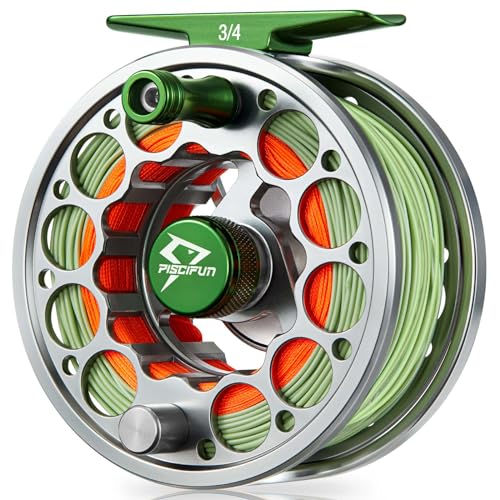
Fly anglers love to debate gear, but few pieces of equipment spark as much discussion as the fly reel. Some argue it’s just a line holder. Others insist it’s a critical tool that can make or break your day on the water. The truth sits somewhere in the middle—but when you’re ready to invest in a reel that delivers long‑term performance, reliability, and confidence, a machined fly reel stands out as the smart choice.
Machined reels aren’t just premium for the sake of being premium. They offer tangible, on‑the‑water advantages that cast, fight, and last better than their cast‑aluminum counterparts. If you’re a fly fisherman who values durability, smoothness, and precision, a machined reel deserves a spot on your rod.
🛠️ Built for a Lifetime, Not a Season
Machined fly reels start as a solid block of aluminum—usually 6061‑T6, the same alloy used in aircraft and marine applications. CNC machines carve that block into a reel with incredibly tight tolerances. This process creates a frame and spool that are:
- Stronger and more rigid than cast reels
- Highly resistant to warping, even under heavy drag pressure
- Less prone to cracking if dropped on rocks or boat decks
For anglers who fish rugged terrain—boulder‑strewn rivers, saltwater flats, or backcountry creeks—this durability isn’t a luxury. It’s insurance. A machined reel can take abuse and keep performing, season after season.
🎣 Smooth, Consistent Drag That Protects Your Tippet
One of the biggest functional advantages of a machined reel is the drag system. Because the frame and spool are cut with precision, the drag components fit together perfectly. That means:
- No startup inertia spikes that snap light tippet
- Consistent pressure throughout the fight
- Better heat dissipation during long runs
- Sealed drag options that keep grit, sand, and salt out
If you chase trout in fast water, redfish on the flats, or steelhead that love to run, a smooth drag isn’t optional. It’s the difference between landing fish and watching them break off.
⚖️ Lightweight Without Sacrificing Strength
Machining allows manufacturers to remove material strategically, shaving weight while maintaining structural integrity. The result is a reel that balances beautifully on modern graphite rods. A well‑balanced setup reduces fatigue, improves casting accuracy, and makes long days on the water more enjoyable.
Cast reels can be light, but they often achieve that weight by using thinner, weaker metal. Machined reels achieve it through engineering.
🌊 Better Corrosion Resistance for Fresh and Saltwater
Machined reels are anodized more effectively because the metal surface is uniform and dense. This creates a finish that is:
- Highly corrosion‑resistant
- Less likely to chip or flake
- Better suited for saltwater environments
Even freshwater anglers benefit. Sand, silt, and moisture are constant threats, and a reel that shrugs off corrosion will stay smooth far longer.
🔧 Precision Fit Means Fewer Problems
Because machined reels are cut to exact specifications, the spool and frame fit together with almost zero play. That tight fit prevents:
- Line slipping between the spool and frame
- Wobble during retrieves
- Uneven drag pressure
- Annoying rattles or vibrations
It’s the kind of refinement you don’t notice until you fish a reel that doesn’t have it.
💰 A Smart Long‑Term Investment
Machined reels cost more upfront, but they pay you back over time. They last longer, perform better, and hold their value. Many anglers fish the same machined reel for decades. Some even pass them down.
When you consider the cost of replacing cheaper reels that warp, corrode, or fail under pressure, the math becomes clear: buy once, cry once.
🎯 Final Thoughts
A machined fly reel isn’t about showing off. It’s about fishing with gear that won’t let you down. Whether you’re stalking brook trout in tight mountain streams or battling bull reds on the flats, a machined reel gives you the strength, smoothness, and reliability to fish with confidence.
If you’re ready to upgrade your setup, a machined fly reel is one of the smartest—and most satisfying—investments you can make as a fly fisherman.