


You cannot pick up a book about trout fishing in Virginia without reading an article or two about the Smith River special regulation area. The Smith River is one of the few tailwaters in Virginia. The Corps of Engineers regularly releases water from the base of the Philpott dam, maintaining trout-friendly temperatures for 20 miles downstream. The most popular part of the river is the special regulation section that starts at the Route 666 bridge in Bassett. That was my destination on this day.
As you cross the bridge coming from the South, make an immediate right, and there is a small parking area stretching 25 yards along the side road. There is easy access to the river at the base of the bridge via a beaten-down trail. In addition, you can walk down the side road and hop into the river at several different places. I rolled in here around 7 AM on a Friday in early October and was surprised to see another fisherman ahead of me. Not wanting to pressure him, I walked a hundred yards upstream and entered the water there.
At the bridge, the river runs at a steady 2 feet deep, with deeper holes clustered along the banks, sheltered by overhanging trees and bushes. The water is crystal clear, and I could see trout skittering out of the way as I tried to enter the water with minimal noise and clatter. With my memory’s eye focused on the Hatch charts in the Flyfisher’s guide, I began working the river with terrestrial patterns. Nothing much was moving at this time of day as I fished upstream without any interest from the trout that I knew had to be here. I was not concerned because this section of the river has a significant built-up area along both sides. On the East side, it borders an industrial area, with train tracks separating the river from the factory. On the West side, small houses are stretched along a side road for the first half mile of the river. Given my assumption of pressure based on the proximity of this built-up area, I was happy to fish this section to get upstream into the more “remote” areas.
100 yards into the day, I looked upstream and saw another fly fisherman. Wow. 2 guys, 7 AM, a Friday. This water must really get hammered on the weekends! Again, not wanting to mess with his water and unable to figure out if he was going up or downstream, I left the water to the east and hopped on the train tracks to use my road to the remote section upstream. After leaving the industrial area, the tracks run right by another set of houses on the east bank. A few friendly dogs were sniffing around, but not much else was moving at this time of the morning. They paid no attention to me as I walked by. I moved upstream to the bend in the river to ensure that there would be plenty of distance between the other fishermen and me. The rail bed is in this section with a steep, precipitous slope separating it from the river. You must pick your entry point carefully, or you will find yourself pitching headfirst into the water. I found a good spot and slid down to reenter the stream.
At this point, signs of built-up areas had disappeared, and it felt appropriately remote. I continued to fish upstream, with absolutely no luck catching trout. They were here; I could see them from time to time, but they were totally uninterested in anything I was throwing at them. I fished upriver for about 2 miles with unchanging lack of luck.

The river itself remained exceptionally scenic. Other than the loud clatter of a train or two barreling by on the active tracks (something you need to pay attention to if you are using the railbed as a road), there was only the gentle sound of the river and the associated birds and forest noises to fill in the day. The river continued to flow through a heavily forested area, with plenty of trees looming over it to provide additional shade for both the fisherman and the fish.
Once you are in the river, you stay there. There is no trail that would let you skip any unproductive-looking water. The bank remains high and steep on the train side as well. I fished my way up to a wide spot in the river and saw rocks poking up in the distance, which marked a change in gradient. Hoping for a good pool where the trout would cluster to enjoy the channeled food and increased oxygen content, I walked up there.
I was surprised to see a mowed lawn and a smooth bank that led up to a small shack (see picture). There is a road that leads here, but I am positive that it must have a gate to prevent access except for the owner. With that, I assumed that the pool, which lay at the base of the rocks, and the lawn would see plenty of attention from any visitor.
Rats. This was going to be a day of fishing rather than catching. I worked the pool for a bit and did get two strikes, but nothing was brought to hand. At that point, I decided to move to a different section of the Smith, so I climbed onto the tracks and walked the two miles back to the truck.
Smith River Trout Fishing Bottom Line: The Smith is a great river. None of the authors can be wrong about that. In addition, I did see fish – this river is noted for the large population of native browns – I did not have the right level of skill to catch them. But the pressure has to be staggering in the special regulation area, given what I saw on a late-season workday. With that, I do not think I would return to fish this part of the river.
Getting There: Look up Bassett, VA in Google. Continue through the town on 57 and then turn onto Trenthill Drive. It will go across the Smith River and continue through an industrial area. It turns into North Main Street and then crosses the river again. This is the start of the special regulation area. Turn right after the bridge onto Wells Hollow Road and park.
Google Local Coordinates: 36.770449,-80.000671
Secrets Revealed? No. This is a very public location that is documented in the following places:
Flyfisher’s Guide to Virginia
Virginia Trout Streams
Virginia Blue-Ribbon Streams
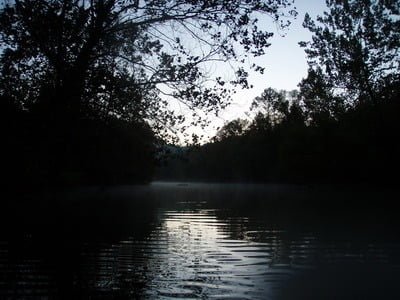
Upstream from the entry point
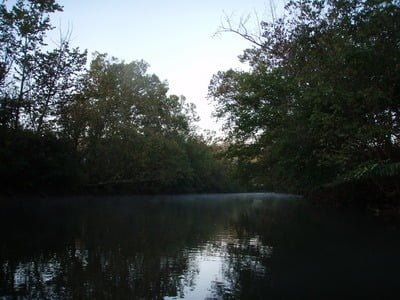
Downstream from the entry point
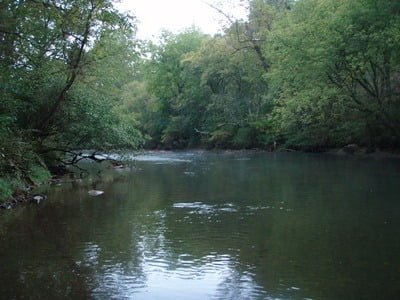
General shot of typical river – reasonably deep, but easily wadeable
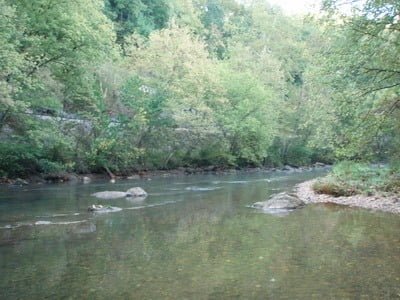
Note the train tracks – they parallel most of the special reg area and provide a high-speed avenue of approach.
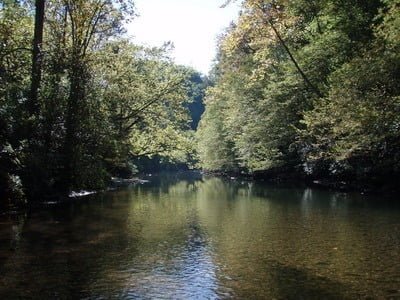
Shallower in some spots
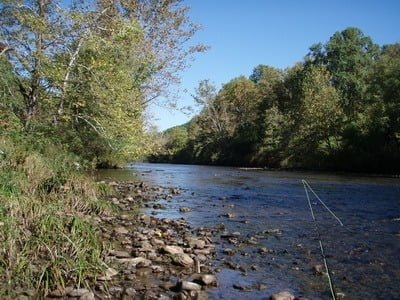
Broad riffle area – I skipped this part – inches deep.
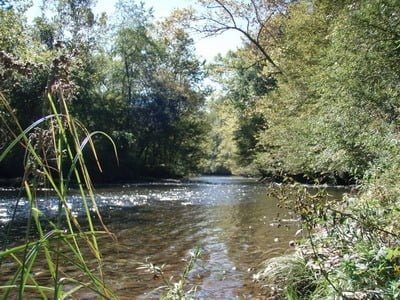
Pretty…
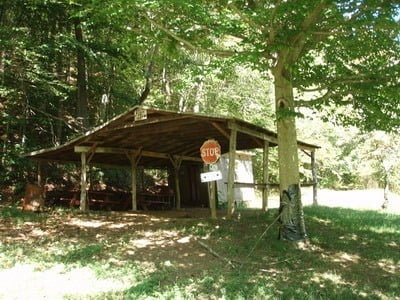
Clearly, this had to be the end of the road, so I turned around here. Odd that this structure, clearly private property, bordered the river. There is a road leading to it, but I imagine there is a gate somewhere that only the owner can access.
Unless stated otherwise, this article was authored by Steve Moore.