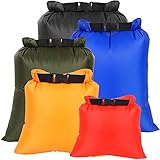
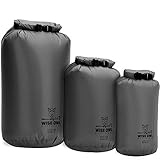
Backpack fishing is all about mobility—moving light, staying organized, and keeping your essentials protected from the elements. Whether you’re hiking into a remote trout stream or working your way along a salt‑sprayed shoreline, the gear you carry needs to survive water, grit, and weather. That’s where small waterproof bags in the 2‑ to 5‑liter range quietly become some of the most valuable tools in your kit.
These compact dry bags hit a perfect balance: big enough to protect the items you absolutely can’t afford to ruin, yet small enough to tuck into any backpack without adding bulk. They’re the unsung heroes of a dialed‑in fishing loadout.
Why Size Matters: 2L, 3L, and 5L Compared
2‑liter bags are ideal for your smallest essentials—keys, wallet, fishing license, headlamp, or a compact first‑aid kit. They’re also perfect for anglers who want to keep their phone accessible but protected. A 2L bag slips easily into the top of a pack or even a cargo pocket, and it’s small enough that you’ll forget it’s there until you need it.
3‑liter bags are the sweet spot for most backpack anglers. They hold a phone, a small camera, a snack, and a few pieces of tackle without feeling cramped. If you’re carrying a minimalist electronics kit—battery bank, charging cable, GoPro batteries—3L is the ideal size to keep everything together and dry.
5‑liter bags are where you step up to protecting bulkier items: a lightweight jacket, gloves, a full electronics kit, or a larger first‑aid pouch. They’re also great for saltwater anglers who want to isolate anything that absolutely must stay dry from the inevitable spray, sand, and salt.
Why Every Backpack Angler Should Carry at Least One
Backpack fishing exposes your gear to constant moisture—rain, river crossings, condensation, and the occasional slip into the water. Even if your backpack claims to be “water‑resistant,” that’s rarely enough. Small waterproof bags give you modular protection, letting you organize your pack into zones that stay dry no matter what.
They also help you avoid the classic fishing‑trip frustration: digging through a wet backpack to find a soaked phone or ruined snack. With a few small dry bags, everything has a place, and everything stays protected.
Smart Ways to Use Them on the Water
- Electronics protection: Phones, cameras, and battery banks stay dry and safe from humidity and spray.
- Emergency kits: Keep fire starters, bandages, and medications dry even in heavy rain.
- Food storage: Prevent crushed or soggy snacks—especially important on long hikes.
- Clothing isolation: A dry pair of socks or gloves in a 5L bag can save a cold day.
- Tackle organization: Separate soft plastics, scent bottles, or small tools from the rest of your pack.
Final Thoughts
For backpack anglers, 2L–5L waterproof bags are inexpensive, lightweight, and incredibly effective. They simplify your loadout, protect your essentials, and make your pack easier to manage on long days outdoors. Once you start using them, you’ll wonder how you ever fished without them.