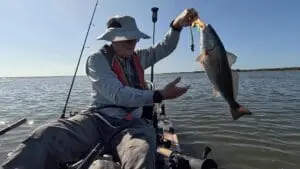

If you want to catch redfish consistently in shallow water, mullet is one of the most reliable baits you can put on a hook. Whether you’re using lively finger mullet or a tough chunk of cut mullet, the key is understanding how redfish behave in skinny water and matching your presentation to their feeding style. Here’s the complete guide to fishing mullet for redfish in water less than three feet deep.
Why Mullet Works So Well for Shallow‑Water Redfish
Redfish are opportunistic predators. In shallow water, they rely heavily on vibration, scent, and visual cues. Mullet checks all three boxes:
- Live mullet creates vibration and flash
- Cut mullet releases a strong scent trail
- Both are natural forage that redfish already hunt
When you present mullet correctly, you’re giving redfish exactly what they expect to find on the flats.
Fishing Live Mullet in Shallow Water
Live mullet is at its best when the water is clear enough for redfish to hunt visually. In skinny water, the goal is to let the mullet behave naturally without weighing it down or dragging it into the grass.
1. Go Weightless for the Most Natural Presentation
In 1–3 feet of water, a weightless rig is king. A sinker will:
- Drag the mullet unnaturally
- Kick up mud
- Increase snags on grass and oysters
A weightless live mullet swims exactly like the real thing — because it is the real thing.
2. Hook Placement: Nose‑Hooking Is Best
For shallow‑water redfish, the best hook placement for live mullet is:
✔️ Through the nose or upper lip
This keeps the mullet:
- Swimming freely
- High in the water column
- Breathing properly
- Looking natural around grass edges
This is the go‑to for sight‑fishing or when redfish are cruising.
✔️ Behind the dorsal fin (secondary option)
Use this when you want the mullet to swim downward or thrash more.
It’s great in slightly deeper pockets or potholes, but in ultra‑shallow water it can look unnatural.
3. Let the Mullet Work the Structure
Redfish in skinny water patrol:
- Grass lines
- Oyster bars
- Creek mouths
- Points with current
- Shallow troughs and potholes
Cast past the structure and let the mullet swim into the strike zone on its own. This looks far more natural than dropping it directly on top of the fish.
Fishing Dead Mullet in Shallow Water
Dead mullet is all about scent. When redfish are rooting around or visibility is low, cut mullet can out‑fish live bait.
1. Keep It Just Off the Bottom
Redfish feed nose‑down, so dead bait belongs near the bottom — but not buried in it.
The ideal height is:
⭐ 1–3 inches above the bottom
This keeps the bait:
- Out of the mud
- Away from most crabs
- Right in the redfish feeding lane
A small buoyant bead or a naturally buoyant head chunk helps maintain this perfect lift.
2. Use the Toughest Part of the Mullet
In shallow water, small fish and crabs are relentless. The best pieces are:
- Mullet heads
- Skin‑on chunks
- Firm, fresh cuts
These stay on the hook longer and release scent steadily.
3. Keep the Rig Simple
A short‑leader Carolina rig (12–18 inches) is ideal.
Too long a leader lets the bait float too high; too short makes it look stiff.
Cast up current and let the scent trail do the work.
Final Thoughts
Fishing mullet for redfish in shallow water is all about matching the fish’s natural feeding behavior. Live mullet shines when redfish are cruising and hunting visually. Dead mullet excels when they’re rooting along the bottom or when the water is murky. Master both approaches, and you’ll be ready for tailers on the flats, cruisers along the grass, and hungry reds working oyster bars.